Biodiversity monitoring in the Adelaide Park Lands
Client
City of Adelaide & Adelaide University Green Urban Futures Group
Year
2024
Overview
The Adelaide Park Lands ‘are a globally significant park system’ that stand out as a ‘vital habitat and biodiversity resource within the city of Adelaide.’ (Hawken et al, 2024a, p.4). They present significant opportunities for novel ways to conserve and promote biodiversity and are critical for their centrality, urban heritage, rich biodiversity, and opportunity for human-nature connection (p.10).
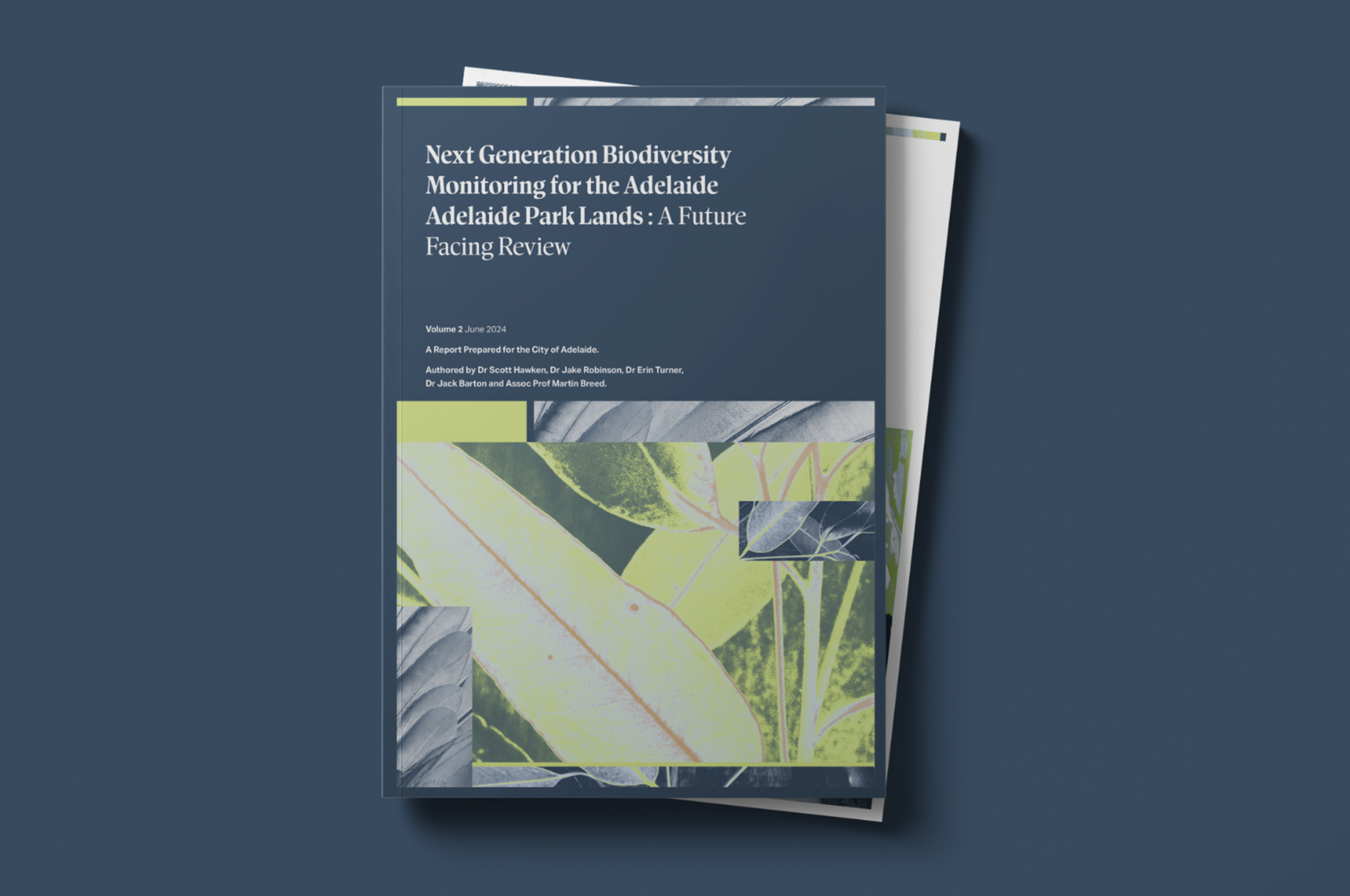
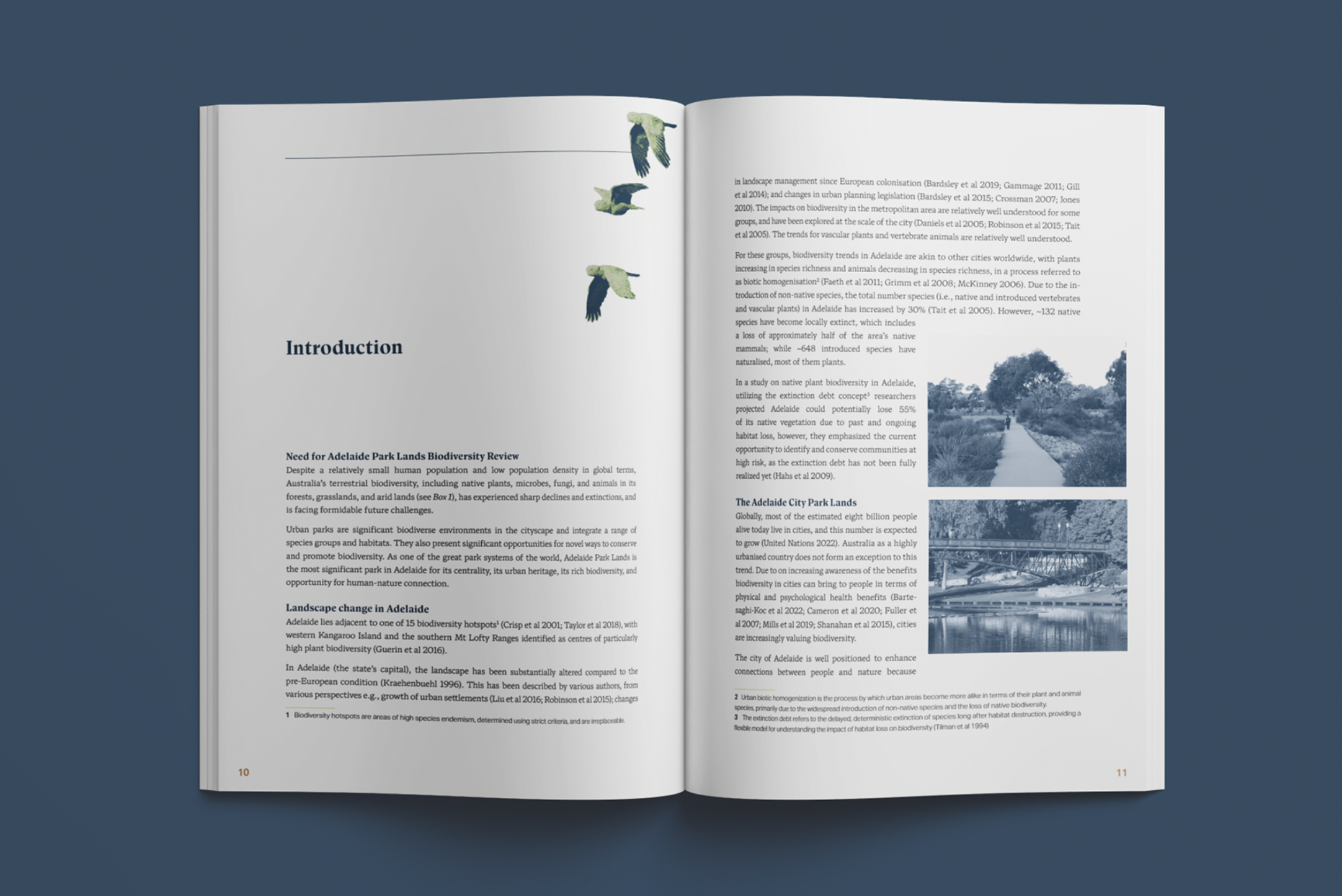
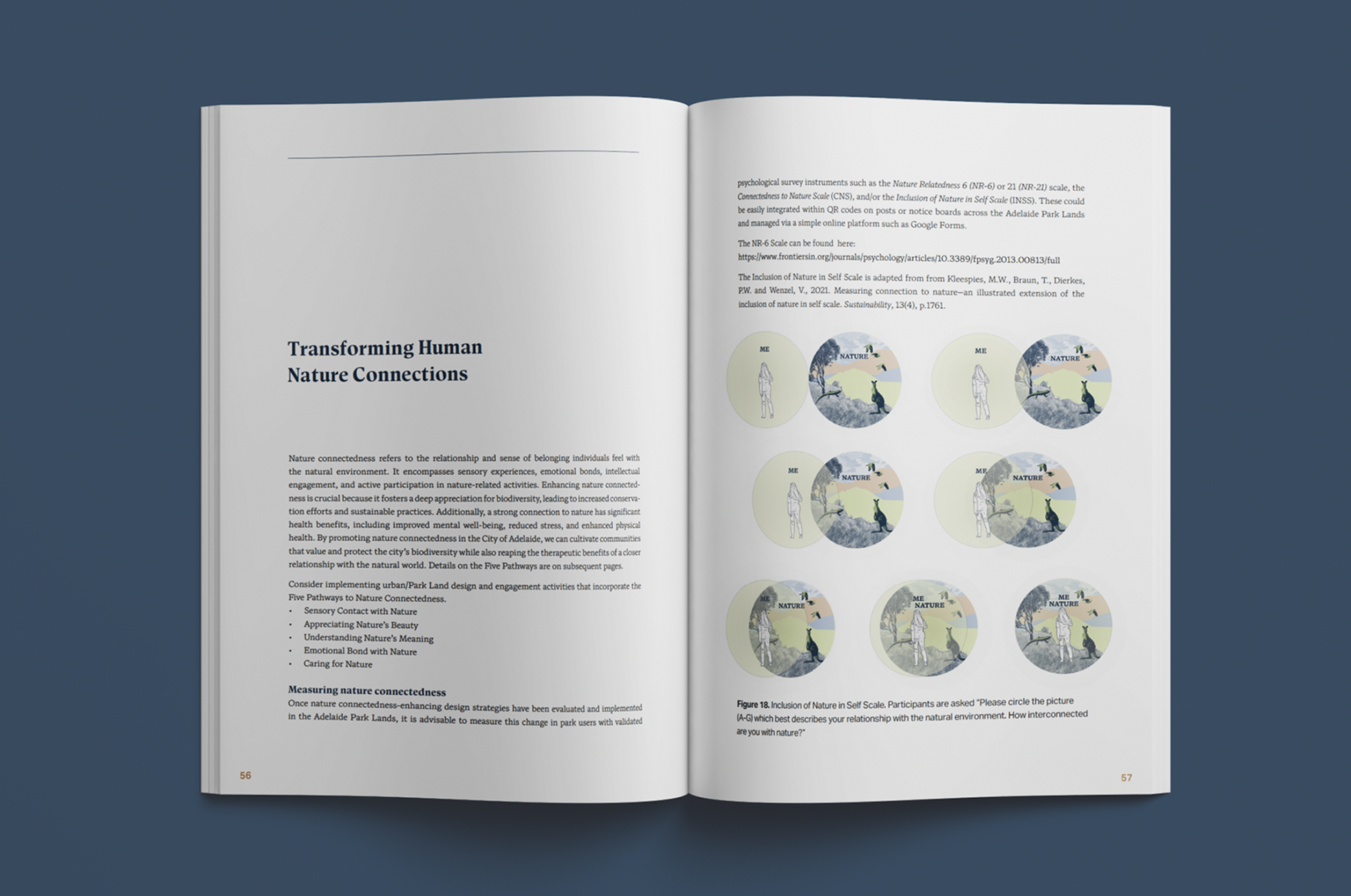
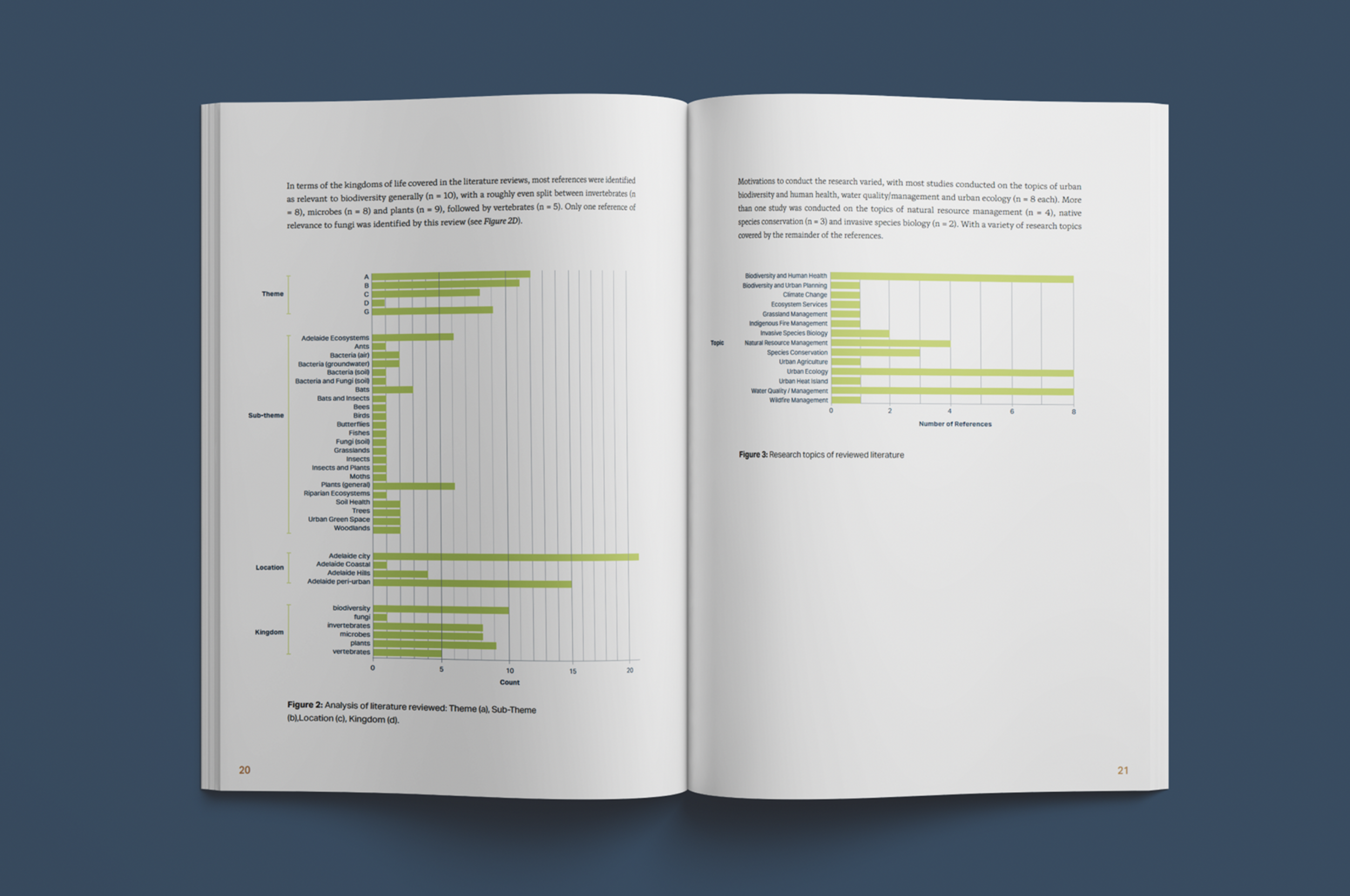
Working in collaboration with academics from the University of Adelaide Green Urban Futures Research Group, Erin was commissioned to visualise concepts and data related to the biodiversity and conservation of the Adelaide Park Lands. Produced for the City of Adelaide, the project involved the development of a suite of visualisations and the design of two major reports.
Challenge
The project required translating complex ecological research and data into forms that could operate as rigorous academic outputs as well as accessible, engaging documents for the broader public and government audiences.
The material was layered and interdisciplinary, encompassing biodiversity concepts, monitoring frameworks, data and research processes. The challenge was to retain the depth and integrity of this material while structuring it a way that could be clearly understood and meaningfully engaged with by diverse audiences.
Approach
Erin worked closely with the research team to develop a visual structure that clarified relationships between concepts, data and research.
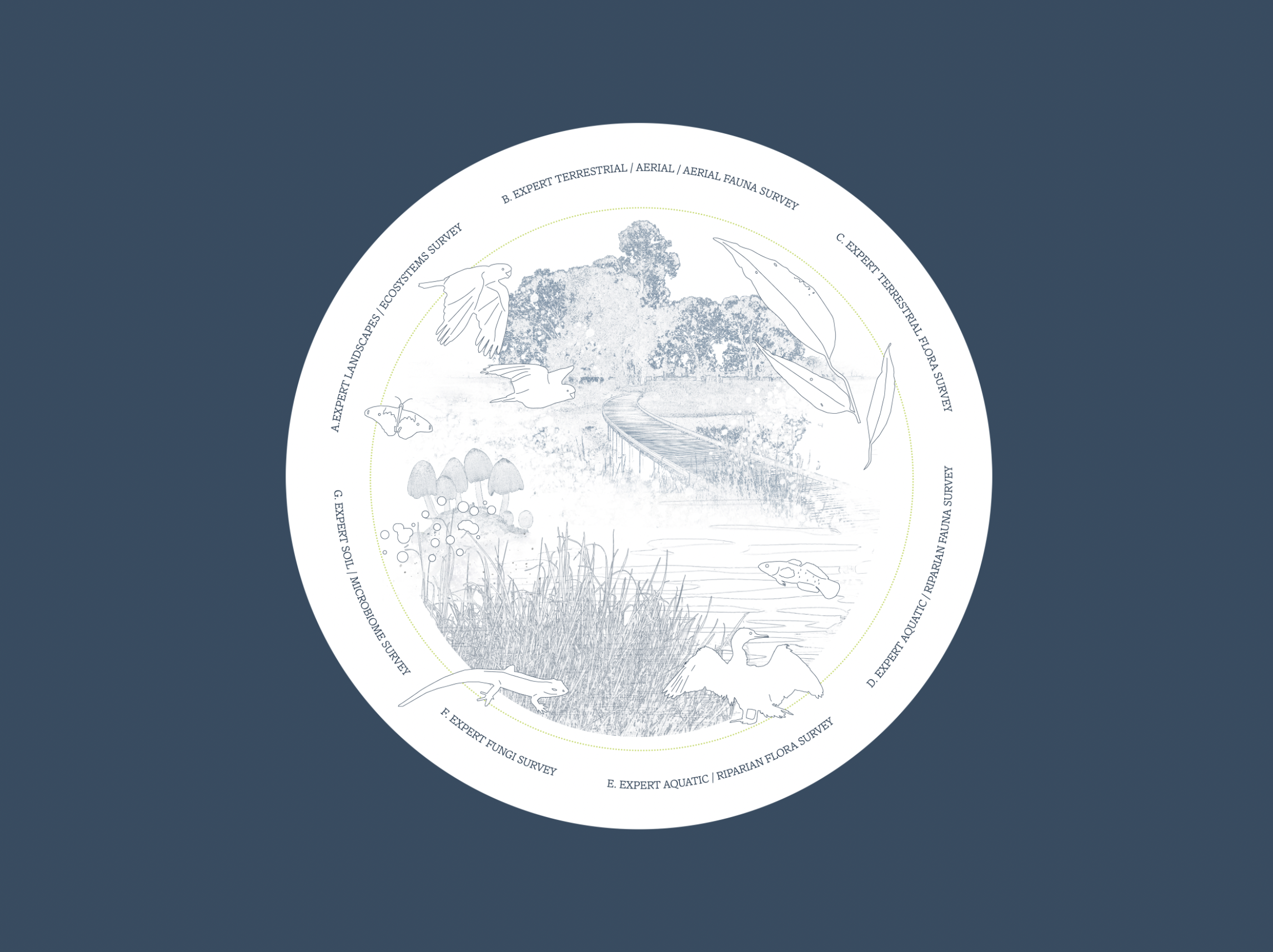
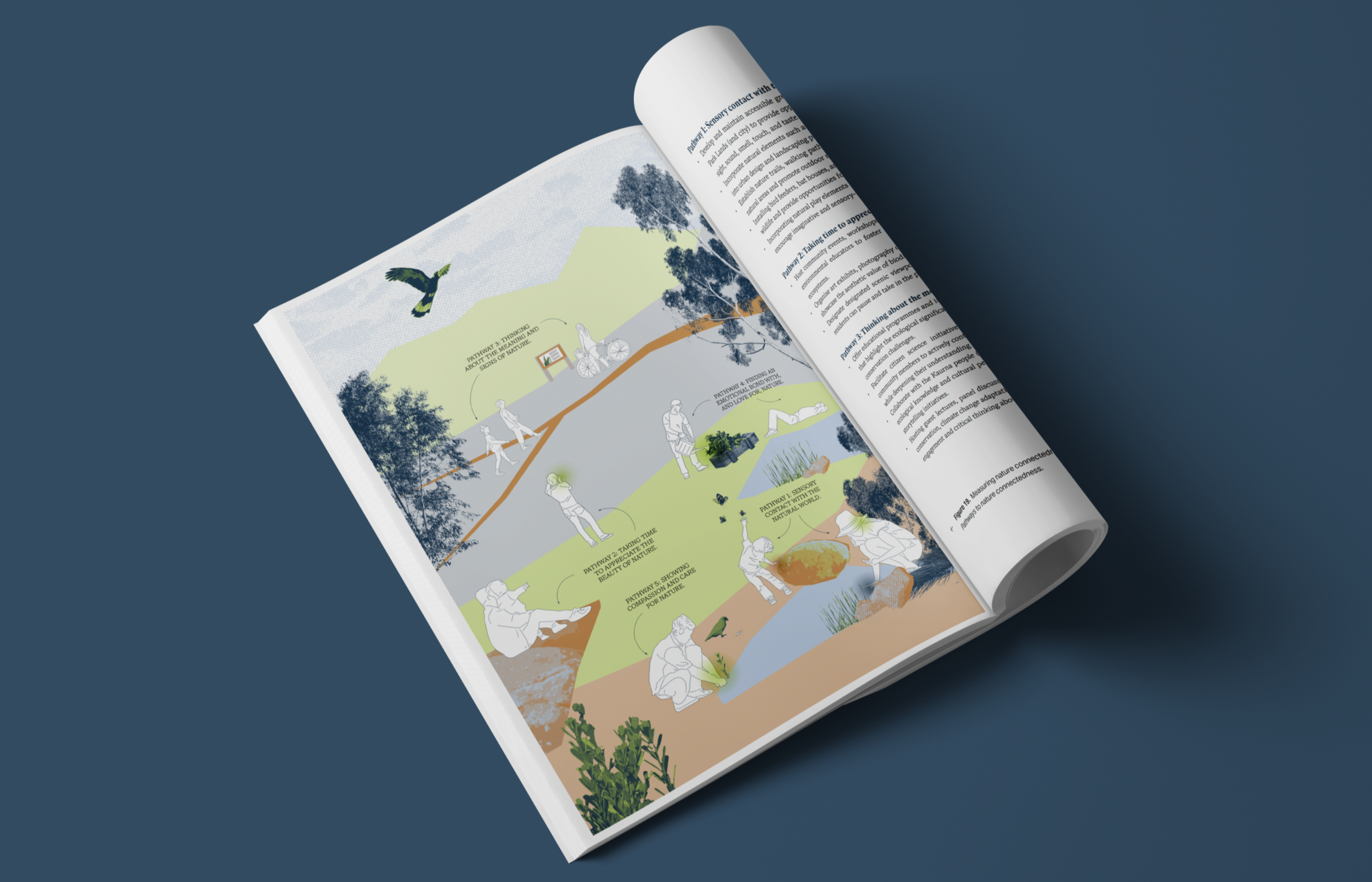
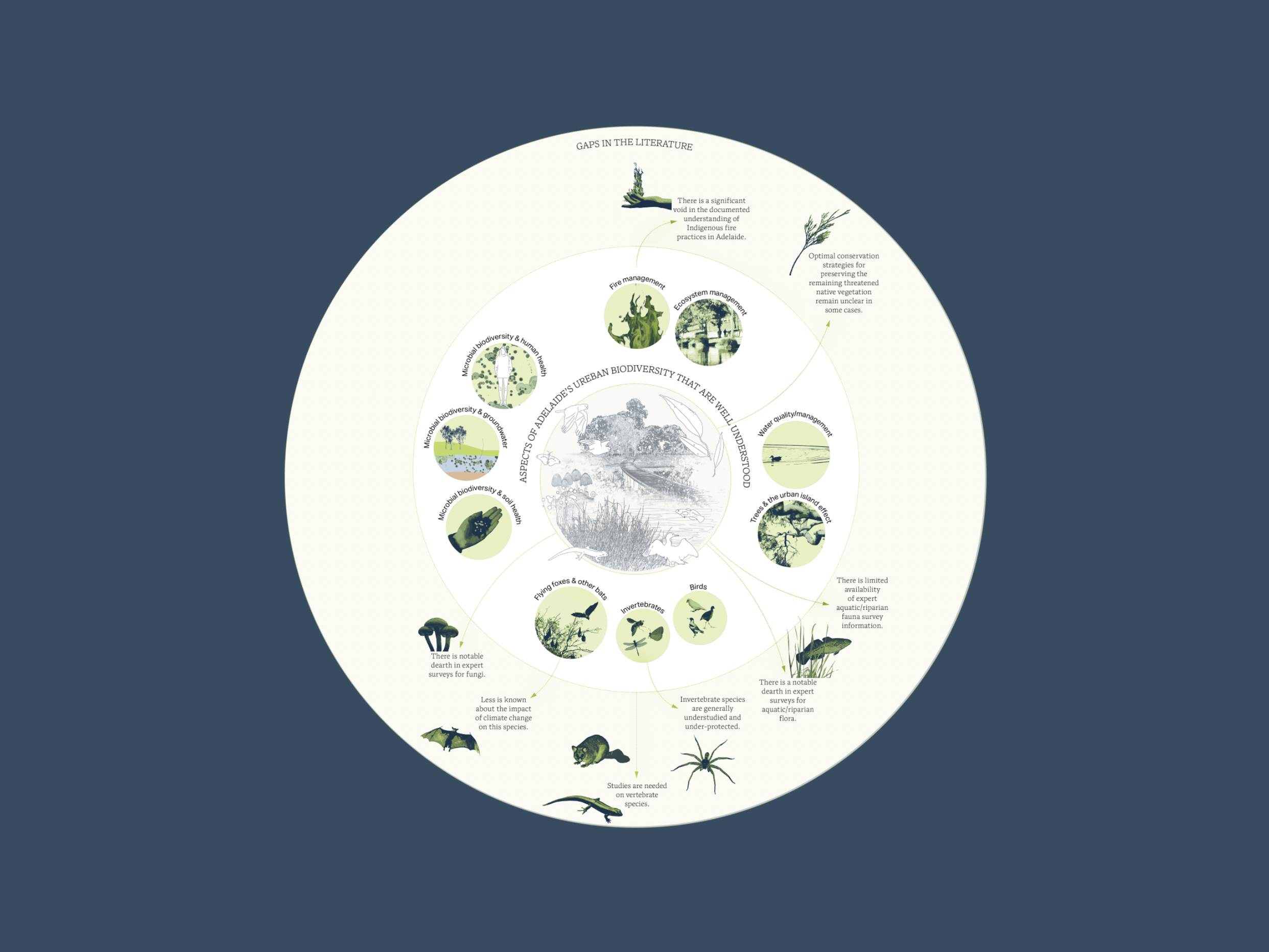
A visual narrative approach was used to reflect the richness and complexity of the Adelaide Park Lands, enabling multiple layers of information to be communicated without oversimplification. Visualisations ranged from maps and diagrammatic representations of research processes to more exploratory and evocative visual forms that articulated key biodiversity concepts.
The work involved an iterative and collaborative process, ensuring that the visualisations remained aligned with the research while extending its clarity, coherence and communicative reach.
Key Outputs Included:
Design and development of two major research reports
A suite of visualisations including:
Maps and spatial representations
Diagrammatic representations of research processes
Visual explorations of biodiversity concepts
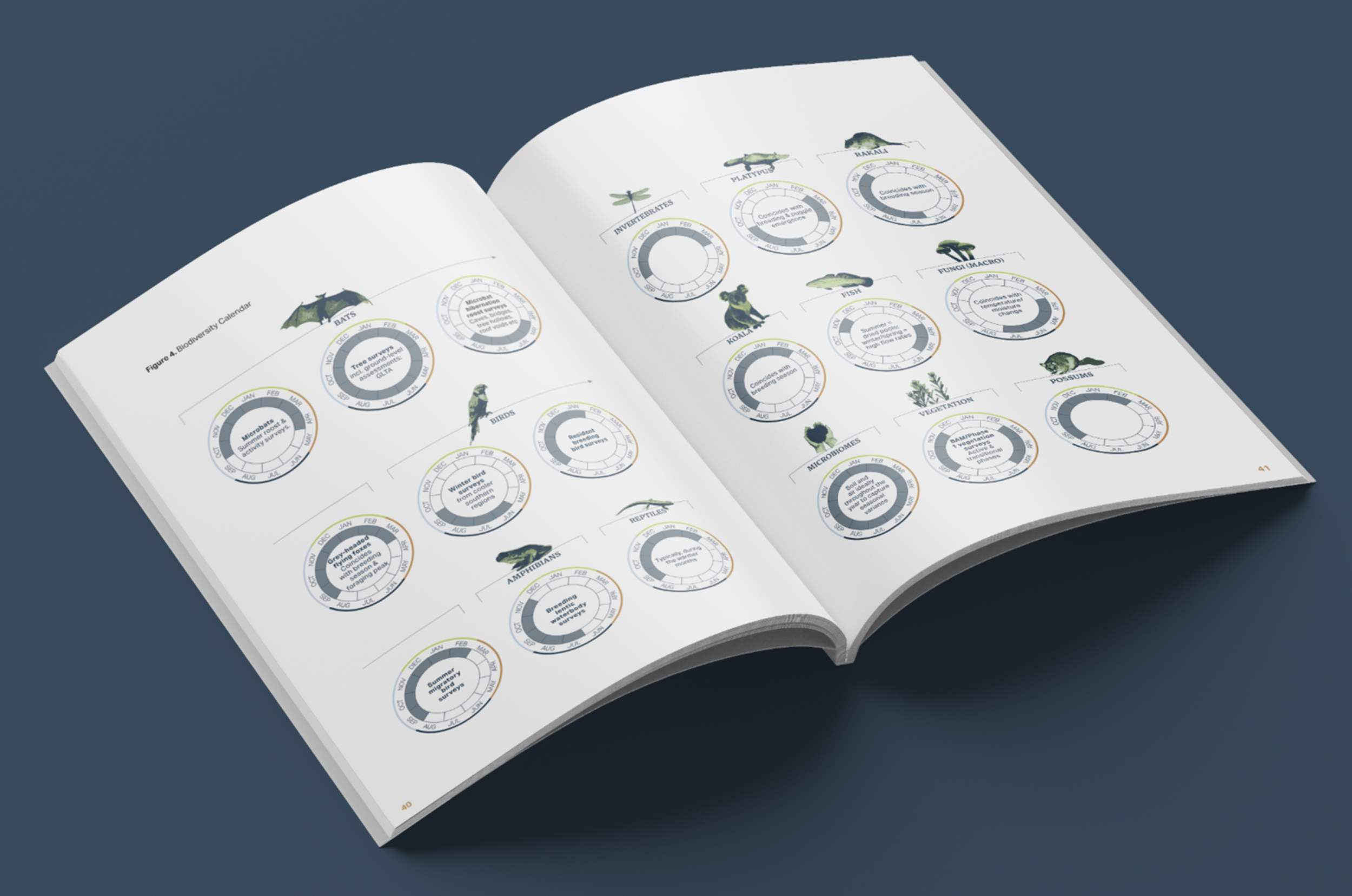
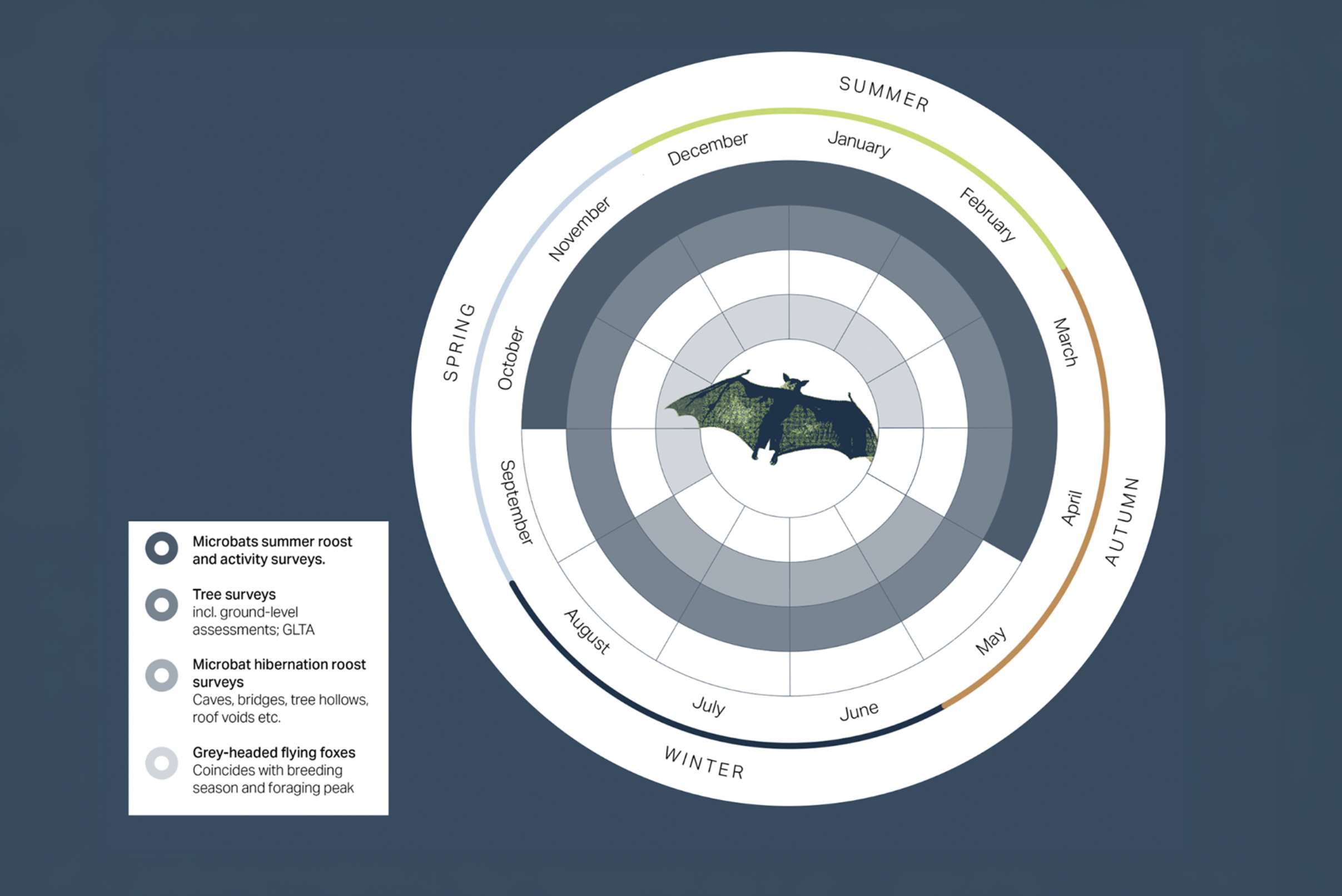
A key part of the second report was the inclusion of a biodiversity calendar — ‘a novel approach to understanding the life cycles of different biota…’ (Hawken et al, 2024, p.38).— to support effective biodiversity monitoring. Erin developed a visual approach to the calendar that was both intellectually robust and evocative (see images 3 and 4).
Outcomes
The project resulted in a set of reports that maintained academic rigour while improving accessibility and engagement. The visualisations supported clearer communication of complex ecological material and enabled the research to be more effectively shared with government stakeholders and the broader public.
Erin’s contribution was recognised through co-authorship on both reports.
Testimonial
“Erin's work on our Adelaide Biodiversity Reports was transformative. She translated dense ecological data into visually compelling stories that engaged readers—no small feat for a government document of two volumes. Her collaborative process kept our scientific team involved while she pushed creative boundaries … Her fluency in both contemporary design trends and science communication brought fresh approaches that elevated our reports and made them come alive”. — A/Prof Scott Hawken, Director of Landscape Architecture and Urban Design, University of Adelaide
References
Hawken, S. McQuillan, M. Turner, E, Barton, J. (2024a) Adelaide Park Lands: Next Generation Biodiversity Monitoring and Assessment Literature Review and GAP Analysis 2003–2023, Report Volume 1, Adelaide, University of Adelaide
Hawken, S. Robinson, J.M. Turner, E. Barton J. Breed, M. (2024b) Next Generation Biodiversity Monitoring for the Adelaide Park Lands: A Future Facing Review, Report Volume 2, Adelaide, University of Adelaide.